Press
Material for your coverage.
Descriptions to quote, facts on all three editions and images at full resolution. All free to use for editorial coverage of Juqed.
Ready to use
Juqed in three lengths.
Juqed turns the playlist into everyone’s business: guests suggest songs by scanning a QR code and vote together – without installing anything.
Juqed turns any party into a shared jukebox. Guests scan a QR code, suggest songs and vote on the queue – for them with no download, no account and no cost. The host stays in control, and an Auto-DJ carries the evening on whenever nobody adds anything. Juqed comes in three editions, none of them with advertising.
Juqed grew out of a problem every host knows: a playlist built in advance never matches everyone’s taste. Sooner or later a song comes on that nobody wanted, and the mood drops.
Developer Michael Hankemann has been DJing at private parties and venues in Germany’s Ruhr area since New Year’s Eve 1999/2000. For his own 40th birthday he wanted to do it differently – the guests should have a say. That became a Mac app first, then one for iPhone and iPad, and most recently an edition for the browser.
All three share the same core: guests open a web page via a QR code, search for songs and vote on the queue. A fair-use system keeps any one person from taking over the evening, a blacklist keeps unwanted music out, and the Auto-DJ takes over when the queue runs dry. For guests it stays at a single scan – no installation, no sign-up.
Apple Music is the music source in all three editions; Juqed for Mac and Juqed Web additionally play your own music library.
Much of what defines Juqed is what is missing. The two app editions ask for a single permission – access to Apple Music – carry no advertising and no third-party libraries, and work without an account. Guests give no real name, and an event’s data sits on a server in Germany and disappears along with the event.
The product family
One promise, three ways to get there.
Put the device in the middle, show the QR code, done. It runs as a hosted service, so host and guests do not need a shared Wi-Fi network. Playback continues in the background: you can pocket the iPhone, lock it and keep using it. A one-time purchase instead of a subscription, with an unlimited number of events.
Music source: Apple Music
View Juqed Go →Nothing to install, just one address in the browser. For hosts who have neither a Mac nor an iPhone at hand. Built for continuous operation: events that keep running, QR codes that stay put, curated collections the Auto-DJ keeps playing from.
Music source: Apple Music and your own files
View Juqed Web →The full set-up for the desk. It indexes your own music library and can play straight from the hard drive – with no streaming subscription and no internet connection at all. Guests join over the local network.
Music source: Apple Music and your own files
View Juqed for Mac →Privacy
What Juqed never collects in the first place.
Juqed is built so that little data arises in the first place – not so that data which does arise is managed well. Four separate privacy policies spell this out: one per edition and one for the website.
No account, no app, no login. The display name is freely chosen, real names are explicitly not required. No email addresses, phone numbers, location data, IP addresses or device IDs are collected.
Juqed Go and Juqed for Mac request exactly one permission: access to Apple Music. No location prompt, no camera, no microphone, no tracking dialog – the strings required for those are not even present in the apps. They carry no advertising and no third-party libraries either. Neither edition needs an account.
Juqed for Mac dropped its anonymous usage statistics with version 1.3 on 15 September 2026 – along with the consent prompt. Since then the app transmits no usage data to the developer at all, and the counts collected earlier have been deleted.
Traffic between host and guests is relayed over HTTPS via a server at Hetzner in Germany. A data processing agreement under Art. 28 GDPR is in place.
When the host ends an event, all event data is deleted immediately and completely. Events that are not ended delete themselves after seven days at the latest.
The Mac edition works locally; communication with guests never leaves your own network. The operator has no access to the processed data at any point. It runs in Apple’s sandbox with read-only access to the single music folder you pick yourself.
No third-party content: no external fonts, no CDNs, no social media widgets. Analytics run on a self-hosted Matomo and only after active consent.
All policies in full: Legal.
The facts.
Michael Hankemann, Waltrop (North Rhine-Westphalia, Germany). Full postal address in the imprint.
Juqed for Mac on 28 April 2026, Juqed Go on 14 May 2026, Juqed Web in August 2026
macOS, iOS and iPadOS, browser
German and English
Apple Music in all three editions. Juqed for Mac and Juqed Web additionally play your own files.
No download, no account, no cost – that applies to the guests. The host does sign in for Juqed Web.
No accounts and no real names for guests, servers in Germany, event data ends with the event. In full under Legal.
Varies by storefront – please check the App Store.
Image material
Images at full resolution.
Free to use for editorial coverage of Juqed. Crediting “Juqed” is enough. Download them one by one, or all at once.
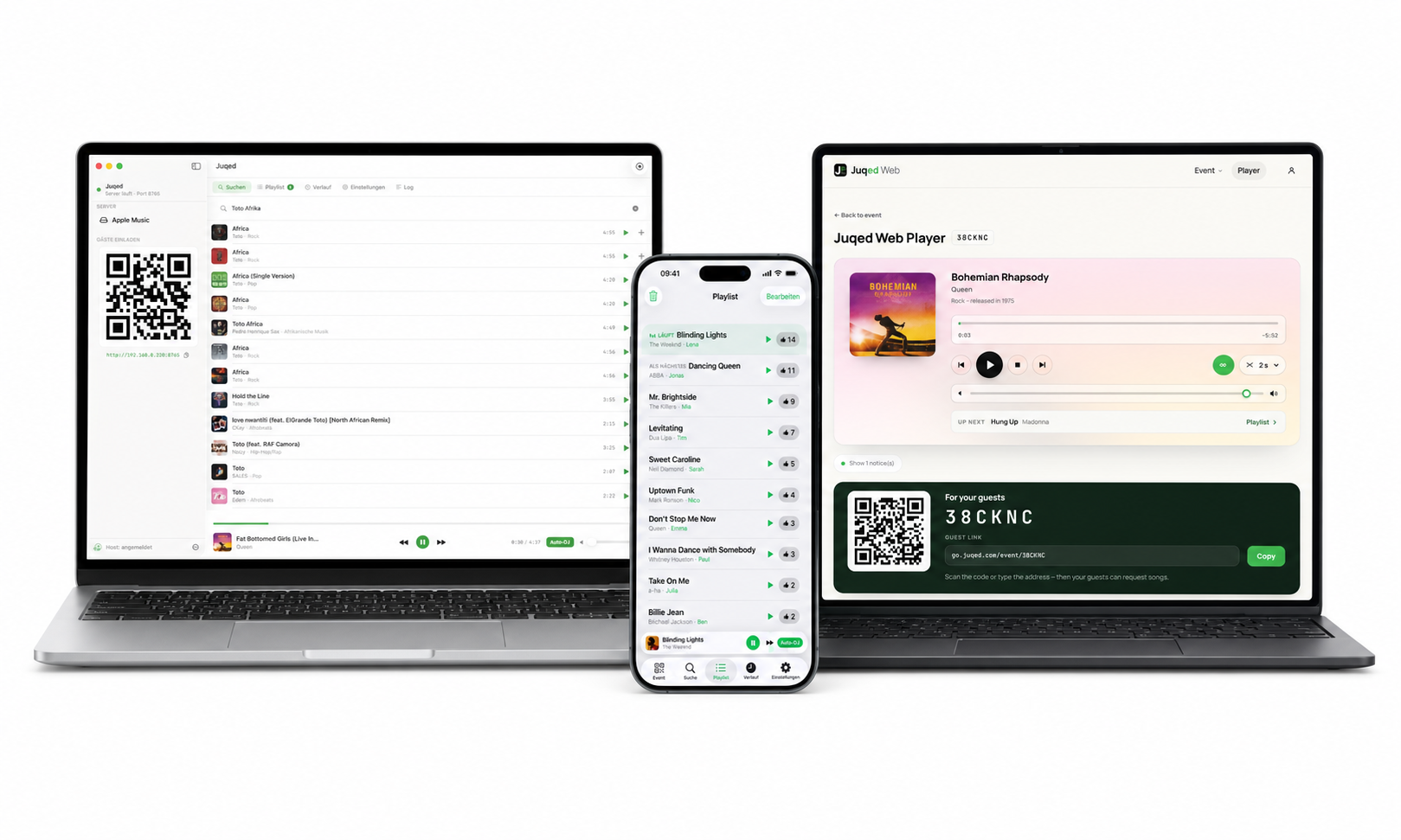
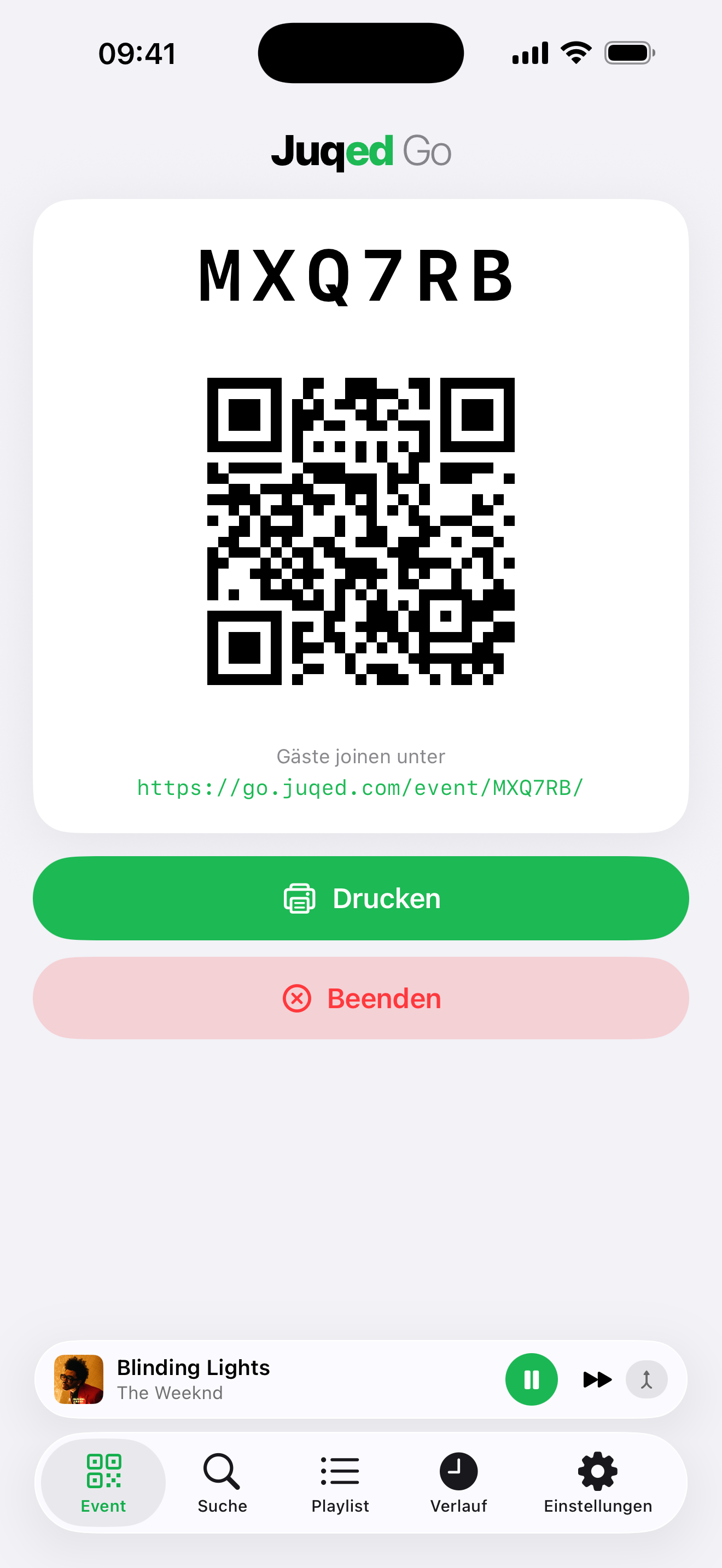
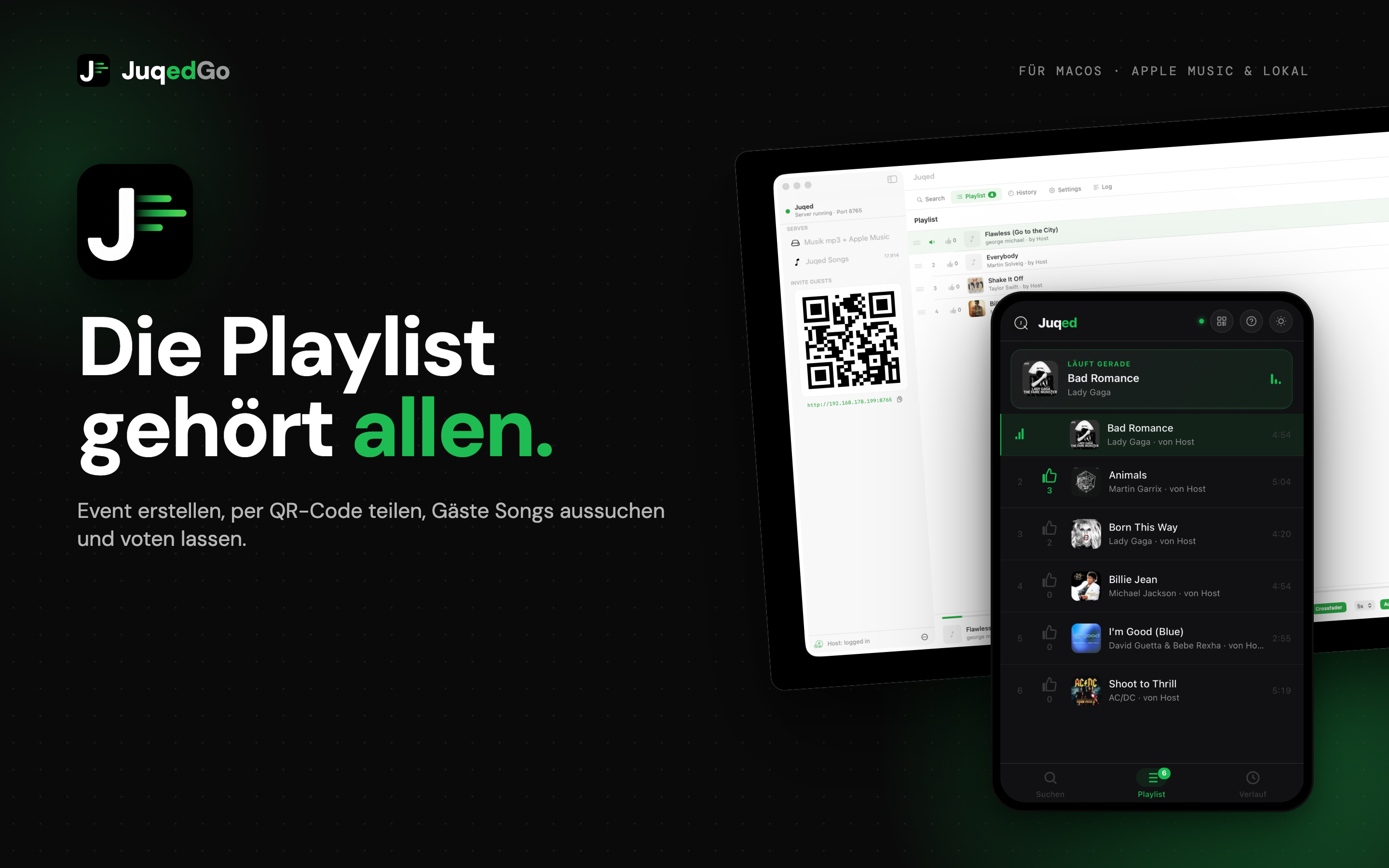
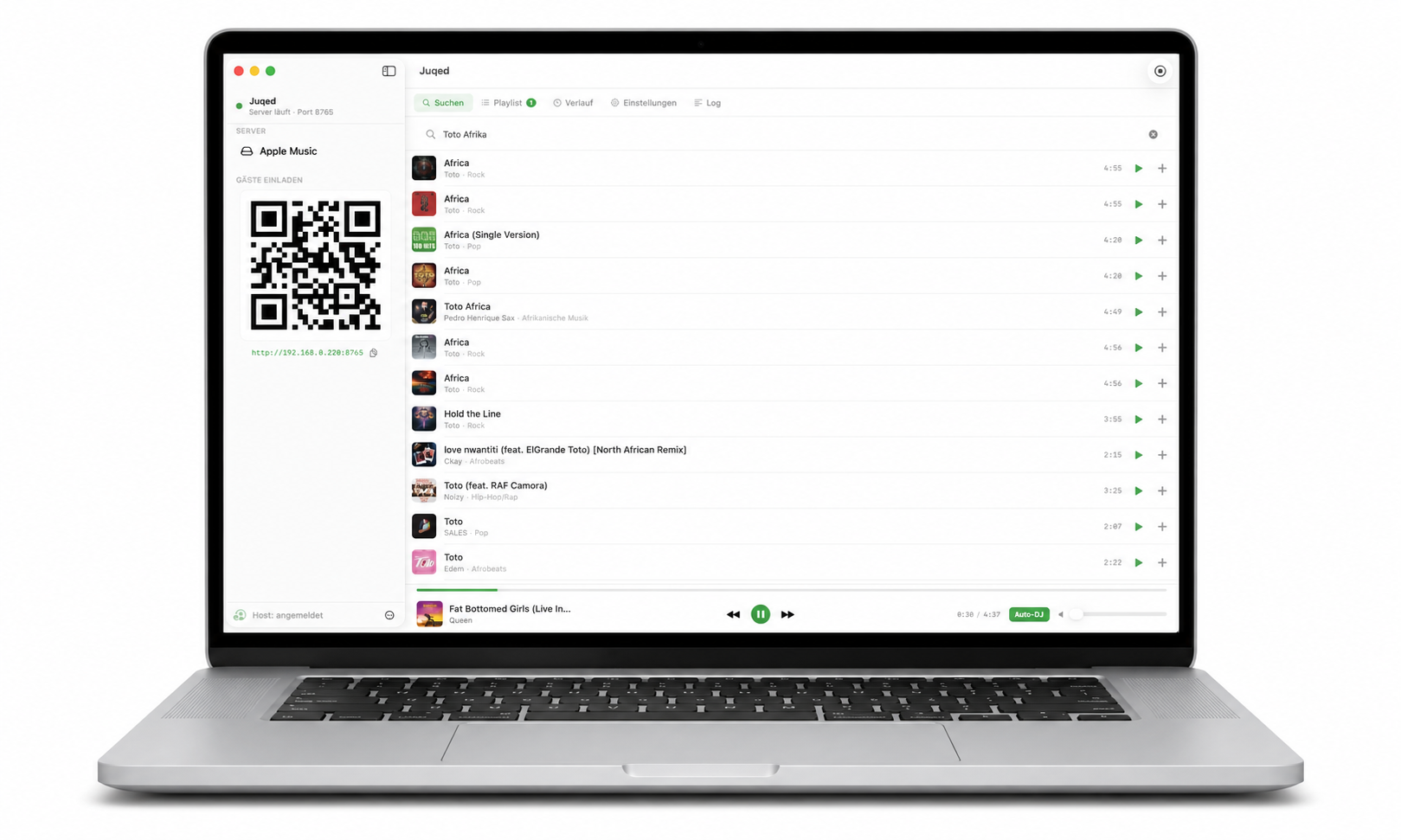
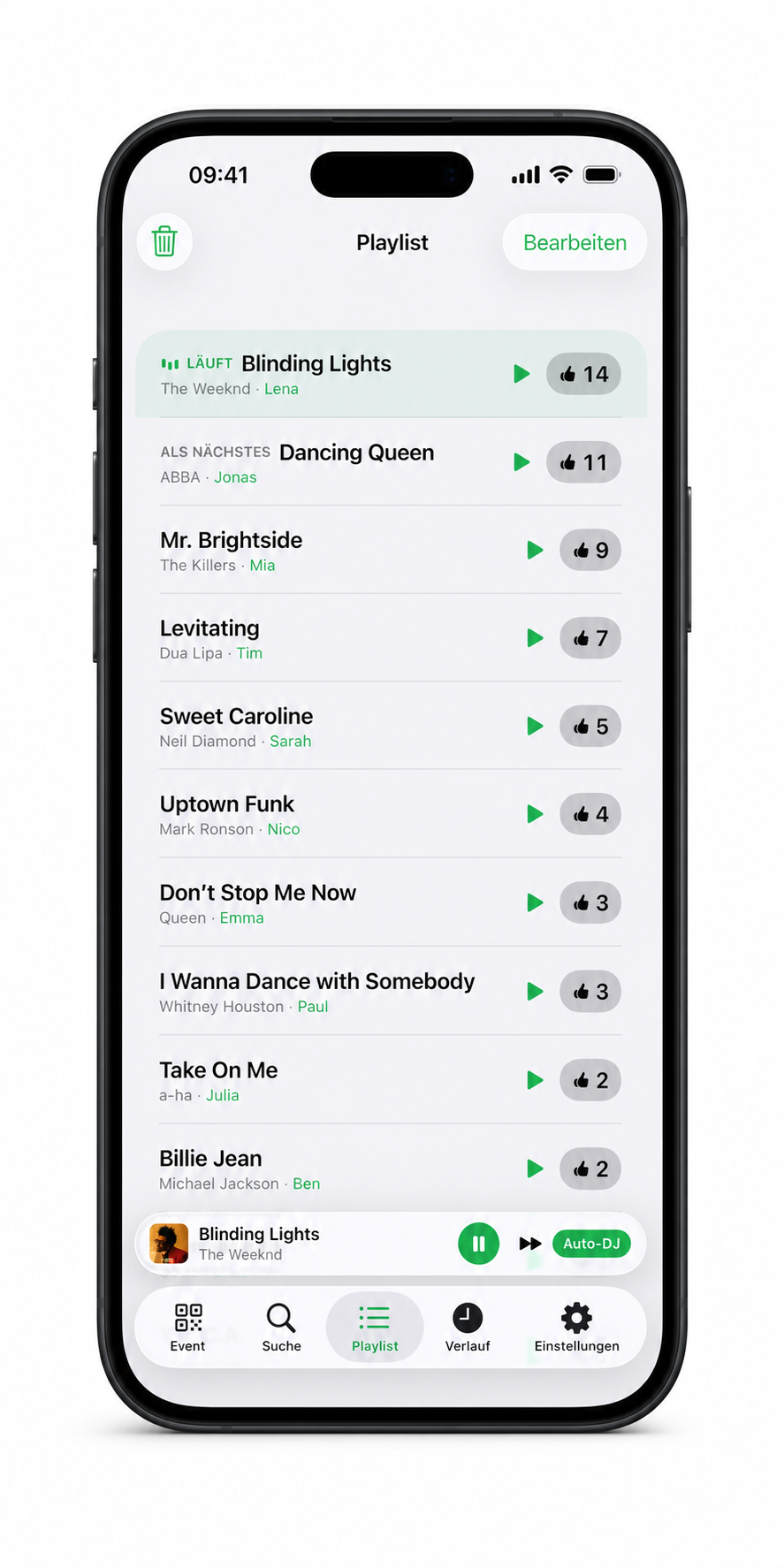

The package also contains the app icons of all three editions, the Juqed Go wordmark and further screenshots from Juqed Go and Juqed for Mac. A bildnachweis.txt lists the matching caption for every file.
Press contact
Questions, review copies, interviews.
Juqed is built by one person – I answer enquiries myself, usually the same day. I am happy to provide promo codes for Juqed Go and Juqed for Mac, as well as a full, free account for Juqed Web.
Email: loading …
Michael Hankemann, Waltrop, Germany · The full provider identification is in the imprint.